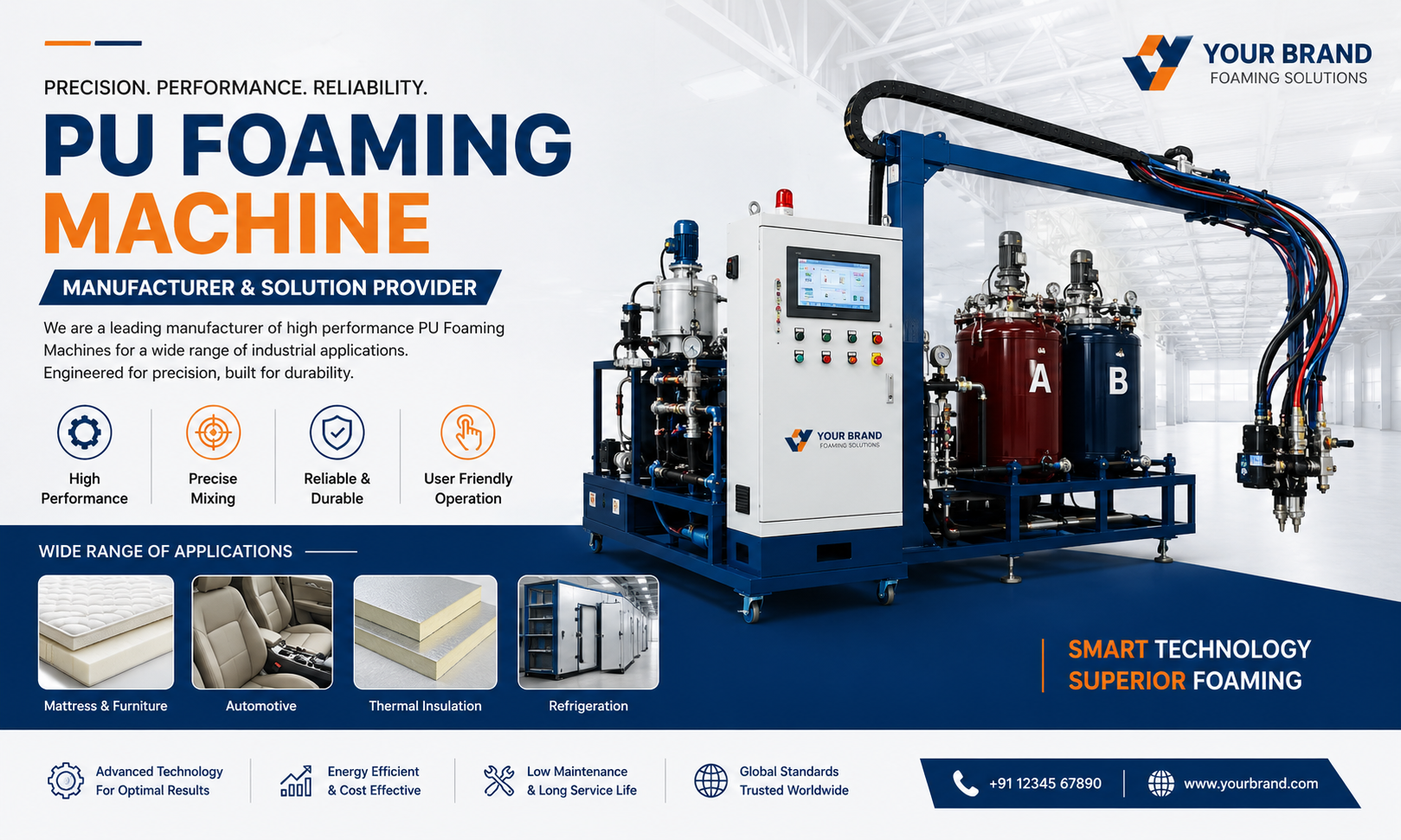
Buying a PU Foaming Machine is not just about comparing prices. For most footwear manufacturers and production businesses, the machine becomes a part of daily operations for years. A poor purchasing decision can lead to production delays, frequent maintenance issues, inconsistent output, and increased operational costs.
Many businesses focus only on machine specifications while ignoring one of the most important factors—the manufacturer behind the machine. The quality of support, manufacturing standards, spare part availability, and industry experience often have a bigger impact on long-term performance than the machine itself.
If you are planning to invest in a new PU Processing Machine Manufacturer or upgrade your existing production setup, understanding how to choose the right manufacturer can save both time and money. This guide explains the key factors every buyer should evaluate before making a decision.
Why the Manufacturer Matters More Than Many Buyers Realize
A PU Foaming Machine may look similar on paper when compared with other options in the market. However, the real difference often appears after installation.
Imagine a footwear production unit running multiple shifts every day. If a machine stops unexpectedly and spare parts are difficult to obtain, production schedules can be affected immediately. Delayed deliveries and production losses can quickly become expensive.
This is why experienced buyers often evaluate the manufacturer's reliability before focusing on pricing.
A dependable Polyurethane Foaming Machine Manufacturer understands production challenges and provides machinery designed for long-term industrial use.
Understand Your Production Requirements First
Before contacting suppliers, define your actual production needs.
Ask yourself:
- What is your daily production capacity?
- What type of footwear products are you manufacturing?
- How frequently will the machine operate?
- Do you plan to expand production in the future?
- What level of automation do you require?
Different production environments require different machine configurations. Choosing a machine without understanding production goals can create unnecessary limitations later.
A manufacturer that asks detailed questions about your business usually provides better recommendations than one focused only on making a sale.
Evaluate Manufacturing Experience
Experience plays a significant role when selecting a machinery supplier.
Manufacturers with industry experience often understand:
- Common production challenges
- Machine performance requirements
- Maintenance concerns
- Material compatibility
- Production efficiency expectations
An experienced supplier can often identify potential problems before they occur and recommend solutions based on practical industry knowledge.
Look for companies that have experience supplying machinery to footwear manufacturers and industrial production units.
Check Machine Quality and Construction
The durability of a PU Processing Machine directly affects operational efficiency.
A machine used daily should be capable of handling continuous production without frequent breakdowns.
When evaluating machinery, consider:
- Build quality
- Component durability
- Operational stability
- Ease of maintenance
- Spare part availability
Many buyers overlook spare part support during the purchasing stage. However, easy access to replacement parts can significantly reduce downtime in the future.
Importance of Low Pressure PU Foaming Machines
Many footwear manufacturers prefer a Low Pressure PU Foaming Machine because it offers practical advantages for specific production environments.
Some benefits include:
- Consistent foaming performance
- Smooth operation
- Lower maintenance requirements
- Better production control
- Cost-effective manufacturing support
The right machine configuration depends on production goals, material requirements, and business objectives. Discussing these requirements with an experienced manufacturer helps ensure a better investment.
Look Beyond the Purchase Price
One common mistake buyers make is choosing machinery based only on the initial purchase cost.
A lower-priced machine may appear attractive initially but could result in:
- Higher maintenance expenses
- Frequent production interruptions
- Reduced efficiency
- Increased operating costs
Instead of focusing only on price, evaluate overall value.
Consider:
- Machine lifespan
- Productivity benefits
- Service support
- Spare parts availability
- Operational reliability
Long-term value often matters more than short-term savings.
Evaluate Technical Support and Service
Technical support becomes especially important after installation.
Even reliable machinery may occasionally require:
- Maintenance guidance
- Technical assistance
- Spare parts replacement
- Operational support
Manufacturers that provide responsive customer support help businesses maintain smoother operations.
Before purchasing, ask:
- How quickly is support available?
- Are spare parts readily accessible?
- Is technical assistance provided when needed?
Strong after-sales support often separates dependable manufacturers from average suppliers.
Consider Automated Foam Production Capabilities
Modern manufacturing environments increasingly focus on efficiency and consistency.
Automated foam production systems help businesses improve productivity by reducing manual intervention and improving process control.
Benefits may include:
- Better production consistency
- Reduced material wastage
- Improved operational efficiency
- Higher production output
- More predictable manufacturing results
Automation should align with production requirements rather than being selected simply because it is available.
The Role of Industrial Automation Solutions
As manufacturing continues to evolve, Industrial automation solutions are becoming increasingly important for businesses looking to improve efficiency and competitiveness.
Automation can support:
- Workflow optimization
- Consistent production quality
- Improved operational control
- Better resource utilization
Businesses planning long-term growth should consider machinery that can adapt to future production demands.
Questions to Ask Before Choosing a Manufacturer
Before finalizing your decision, ask the following questions:
- How long has the company been manufacturing PU machinery?
- What industries do they serve?
- Do they provide spare parts support?
- What type of after-sales service is available?
- Can the machine support future production expansion?
- What maintenance requirements should be expected?
These questions help buyers make more informed decisions.
Common Mistakes Buyers Should Avoid
Many businesses encounter problems because they:
- Focus only on pricing
- Ignore service support
- Overlook spare parts availability
- Choose machinery without understanding production requirements
- Fail to evaluate long-term operational costs
Avoiding these mistakes can improve both productivity and return on investment.
Final Thoughts
Choosing the right V.K. ENGG. WORKS Footwear Manufacturer requires more than comparing machine specifications. The right supplier can help support production efficiency, operational reliability, and long-term business growth.
A well-designed machine combined with dependable support and industry experience creates better value over time. By carefully evaluating manufacturing expertise, machine quality, service support, and future scalability, businesses can make more confident purchasing decisions.
For footwear manufacturers and industrial production businesses, selecting the right machinery partner is often one of the most important investments in achieving consistent and efficient production results.